
Particle Informatics: how Digital Design is advancing understanding of particle properties
A new publication arising from the ADDoPT project collaboration describes how a combination of existing and novel approaches has been applied to the assessment and prediction of particle properties intrinsic to the formulation and manufacture of pharmaceuticals via a new, robust workflow applying predictive digital design tools built around the CSD-System software suite.
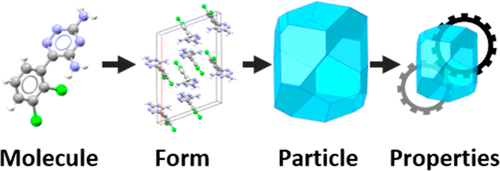
The paper, published in Crystal Growth & Design 2019 19, 9, 5258-5266, follows on from established solid form informatics methods, re-evaluating the context of the drug lamotrigine in the Cambridge Structural Database (CSD), then applying predictive digital design tools built around the CSD-System suite of software, including Synthonic Engineering methods that focus on intermolecular interaction energies, to analyze and understand important particle properties and their effects on several key stages of pharmaceutical manufacturing. A new, robust workflow is presented that brings these approaches together to build on the knowledge gained from each step and explain how this knowledge can be combined to provide resolutions at decision points encountered during formulation design and manufacturing processes.
Britest Senior Innovation Specialist Rob Peeling is a named co-author on this publication.
Dynamic list override (image and text shown when this page appears in a list; not shown on the page)
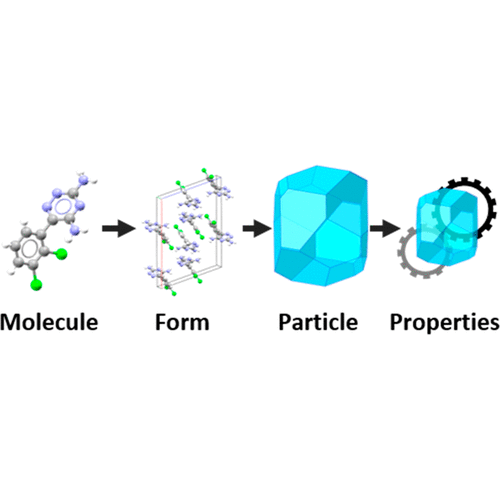
A new publication arising from the ADDoPT project collaboration describes how a combination of existing and novel approaches has been applied to the assessment and prediction of particle properties intrinsic to the formulation and manufacture of pharmaceuticals via a new, robust workflow applying predictive digital design tools built around the CSD-System software suite.